Yeonjimun Gate: The Historic Entrance to Deokjin Park
If you are planning a trip to Jeonju, Deokjin Park should be at the top of your list. In the past, Yeonjimun Gate was the primary entrance to Deokjin Park. Nowadays, the surrounding walls have been removed, creating an open space where people can freely come and go from almost any direction. However, drawn by the pull of my childhood memories, I made a point to enter the park through Yeonjimun once again.
The gate has been beautifully renovated; it’s more ornate and grand than before, and the ground around the entrance is perfectly clean and polished. Yet, seeing it so modern and sleek made me feel a bit nostalgic—perhaps even a little sad. I found myself missing that old, slightly “unpolished” or rustic charm it used to have. While the makeover is impressive, that classic, old-fashioned vibe from my younger days seems to have vanished.
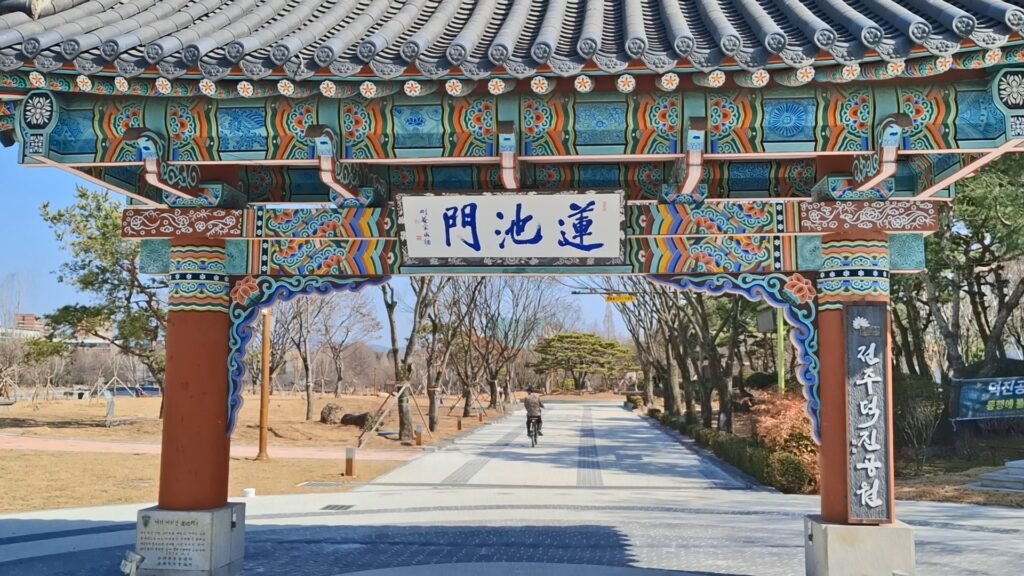
Photo Caption: Yeonjimun Gate
The Story Behind Deokjin Park: Feng Shui and Tradition
The historical origins of Deokjin Park are chronicled in detail on a stone monument located near the park’s main entrance. Interestingly, this area was originally a small marshland. It was transformed into the magnificent pond we see today after an embankment was constructed around it.
This construction was deeply rooted in the principles of Feng Shui (Pungsu-jiri). The levee was built specifically to fortify and supplement the spiritual energy (Gi) of Jeonju City, ensuring prosperity for its people.
The park also holds a significant place in Korean folk tradition. In the past, on Dano (a major traditional holiday on the 5th day of the 5th lunar month), locals would gather here to wash their hair in the pond water, a ritual believed to bring good health and ward off misfortune. While these traditional festivities have faded over time, Deokjin Park continues its legacy today as a beloved sanctuary and a peaceful resting place for all citizens.
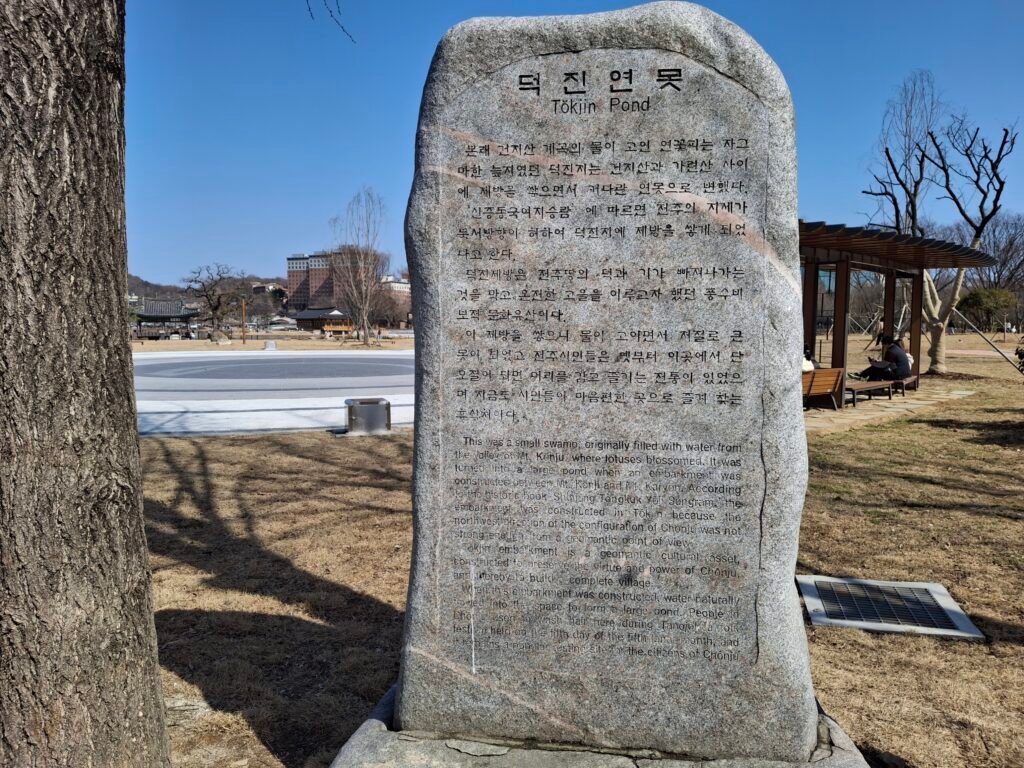
Photo Caption: A stone monument telling the thousand-year story of Jeonju’s energy
A Standing Tribute to Resilience: Poet Shin Seok-jeong
As you pass through Yeonjimun Gate and venture deeper into the park, you encounter a majestic pine tree standing tall in the center of a roundabout. Beside this grand tree stands the statue of our beloved local poet, Master Shin Seok-jeong (1907–1974).
Seeing this statue brought back a vivid memory from my childhood. I remember my Korean teacher telling us how Master Shin resisted the Japanese colonial occupation with unwavering spirit. He even refused the forced “Sōshi-kaimei” (the policy of adopting Japanese surnames) and continued to write powerful resistance poetry.
Last year, I was worried to hear news reports that the city of Jeonju was considering relocating the statue to another spot to improve the scenic view of the park. However, visiting Deokjin Park after all this time, I was incredibly moved and relieved to find the statue still standing exactly where it has always been since my younger days.
Please remain here forever, just as you are now. My deepest respect to you, Master Shin Seok-jeong!
A poet’s spirit never moves; it stays rooted like the pine tree of Jeonju. History is not something we move for a better view; history IS the view.
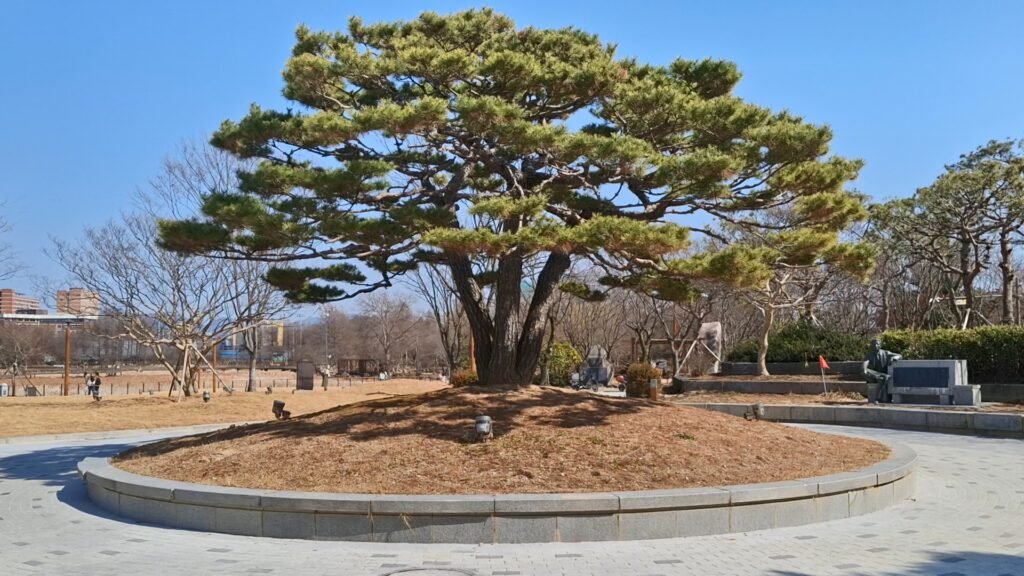
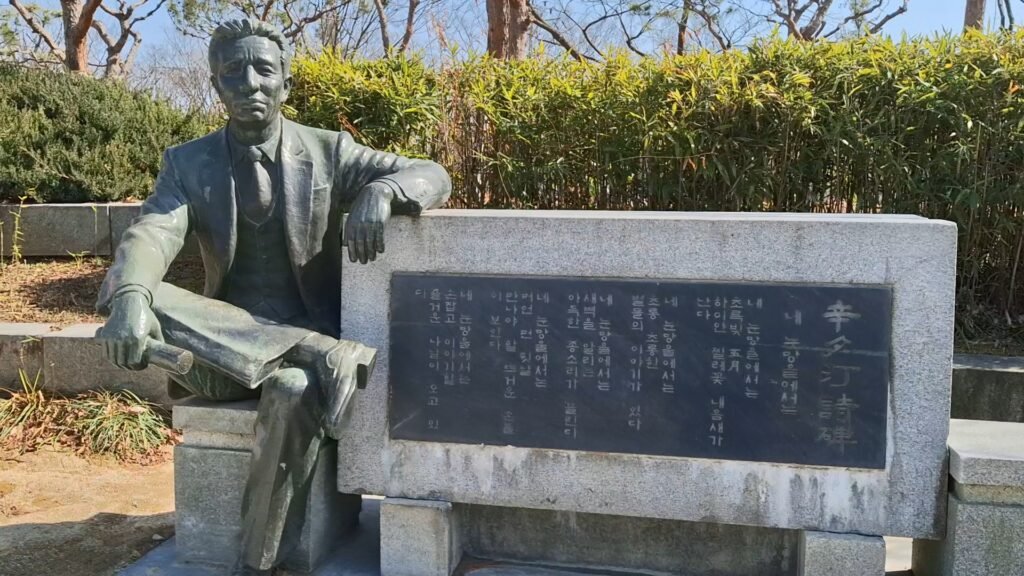
Photo Caption: A poet’s spirit, rooted as deeply as the pine tree of Jeonju
A Library on the Water: Where Memories and Scenery Meet
Walking past the monument and heading further in, Deokjin Pond finally reveals its full splendor. You can see the newly built library standing elegantly in the heart of Deokjin Park, with the Jeonbuk National University dormitories visible in the background.
Seeing the new library brings back so many memories. Where the library stands today, there used to be a small snack shop where I’d excitedly buy treats during school picnics. I also fondly remember riding the duck-shaped pedal boats with my parents. While those old features have been removed to make way for the park’s new look, the current scenery is simply breathtaking.
A library on a lake—how romantic is that? The way the building reflects on the still surface of the water is truly a sight to behold. And as I mentioned earlier at Yeonjimun Gate, this pond becomes a sea of beautiful lotuses in the summer. The sight of the lotus colony in full bloom is a spectacular masterpiece of nature. I find myself already looking forward to the coming summer just to witness that grand view again.
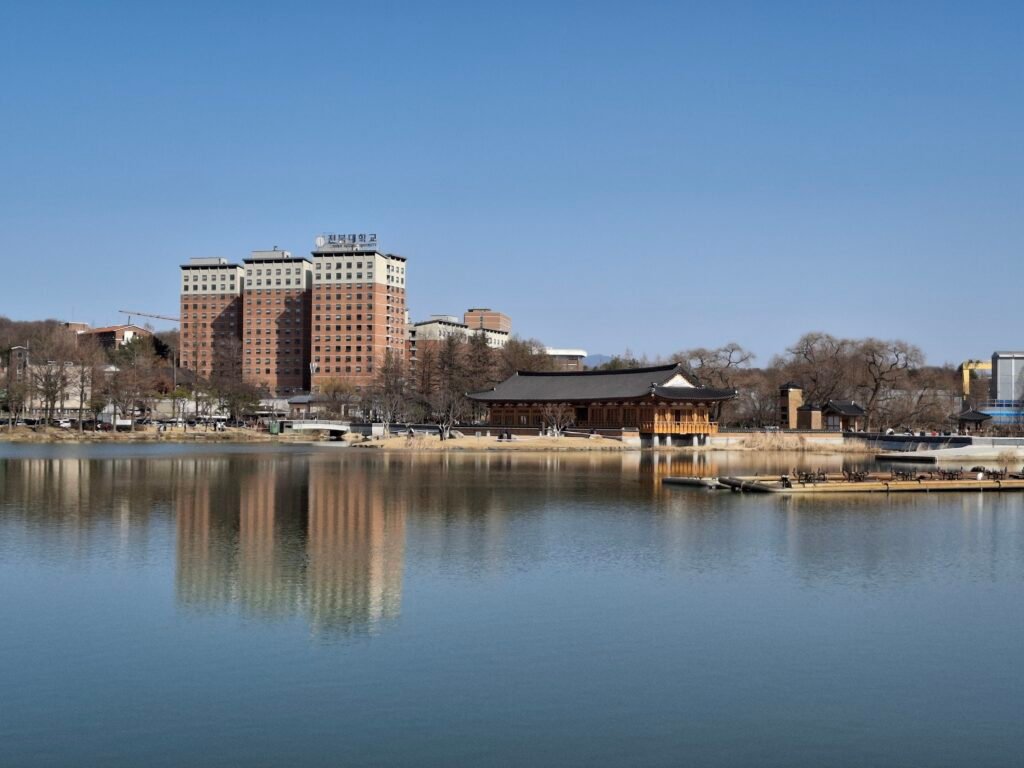
Photo Caption: Yeonhwajeong Library Reflected in Deokjin Lake
Yeonhwagyo Bridge: A Walk Across Time and Water
As you head toward the library, you’ll cross Yeonhwagyo Bridge, which stretches gracefully over the lotus pond. For many Jeonju locals, this bridge is a true landmark of our youth.
I still vividly remember the old suspension bridge that used to be here. As a student, crossing that swaying bridge was always a mix of excitement and a little bit of fear! Today, it has been reborn as a sturdy and elegant bridge that perfectly matches the traditional Hanok style of the new library.
Walking across the new Yeonhwagyo feels like walking on the water itself. It’s the best vantage point to appreciate the vastness of Deokjin Pond and the shimmering reflection of the sky. Even though the “thrill” of the old bridge is gone, the new bridge offers a peaceful and steady path to take in the serene beauty of the lake.
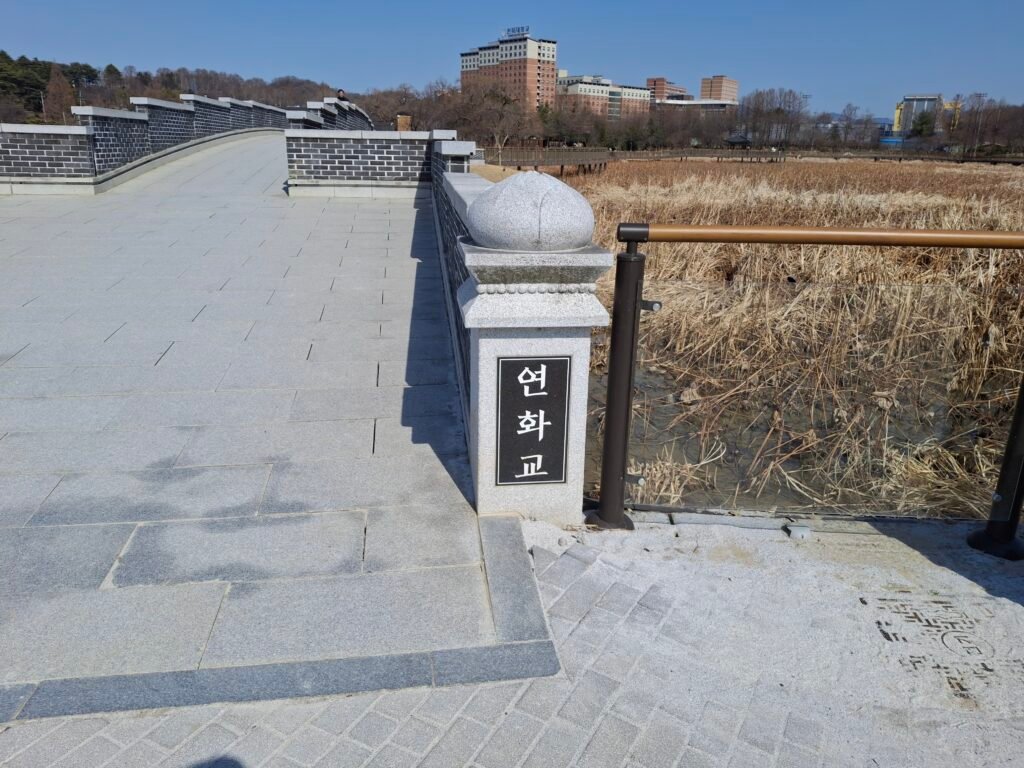
Photo Caption: Yeonhwagyo Bridge, A literal ‘Lotus Flower Bridge’ stretching across the heart of Deokjin Park
Lotus Pond at Deokjin Park: From Winter Silence to Summer Bloom
Beside Yeonhwagyo Bridge, Vast lotus colonies spread across the surface of Deokjin Pond. In the heart of winter, they appear completely withered and lifeless—nothing more than brittle, brown stalks bowing to the frozen pond. To a passing stranger, they might look like they’ve given up, but those of us who know the lake understand that this is a season of profound waiting.
Beneath the cold mud, life is quietly gathering its strength. When the warmth of summer finally touches the water, these seemingly dead roots will perform a miracle. They will push through the darkness and rise again, unfolding lush green leaves and magnificent blossoms that fill the air with their scent.
Watching this cycle year after year, I am deeply moved by the mysterious and resilient power of nature. It’s a beautiful reminder that even in our coldest, quietest moments, we are not “done”—we are simply preparing for our next season of “limitless possibilities” and beautiful bloom.
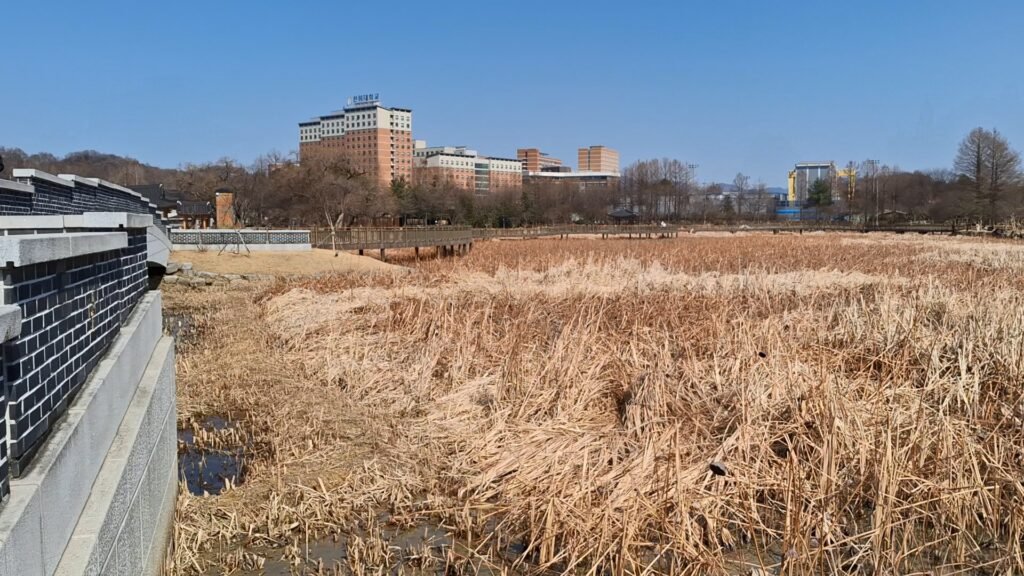
Photo Caption: Vast Lotus Colonies in Deokjin Pond
Traditional Game Tuho at Yeonhwajeong Library in Deokjin Park
As you step off the Yeonhwagyo Bridge, the world seems to open up into the generous front courtyard of Yeonhwajeong Library. Unlike many modern urban structures that feel cramped and restrictive, this surprisingly spacious yard offers a refreshing sense of freedom—a place where the wide sky meets the gentle breeze of the lake. It is a “breathing space” for the soul, designed to harmonize perfectly with the surrounding nature.
The courtyard is alive with laughter and the gentle “thud” of arrows landing in wooden jars. Here, you’ll see families gathered together, fully immersed in a game of Tuho. In this yard, tradition isn’t just a relic displayed behind glass; it is a living, breathing culture played and enjoyed by people of all ages. This vibrant scene adds a layer of human warmth to the serene, scenic view of the Hanok library.
Deep Dive into Tuho (The Art of Pitch-pot)
For those visiting from afar, Tuho is more than just a game; it is a window into the refined culture of Korea’s past. Players attempt to throw long arrows into a narrow-necked wooden or ceramic jar from a specified distance.
- Royal Roots and Nobility: Historically, Tuho was a sophisticated pastime for royalty and the nobility during the Goryeo and Joseon dynasties. It was often featured at royal banquets to entertain guests while maintaining an air of elegance.
- Mindfulness and Etiquette: It wasn’t just about scoring points; it was considered a form of mental training to practice concentration, patience, and proper etiquette. Every throw required a calm heart and a steady gaze, reflecting the Confucian values of self-discipline.
- The Challenge of Precision: The narrow opening of the jar requires immense focus. It is a rewarding challenge where the physical act of throwing meets the mental act of finding inner stillness.
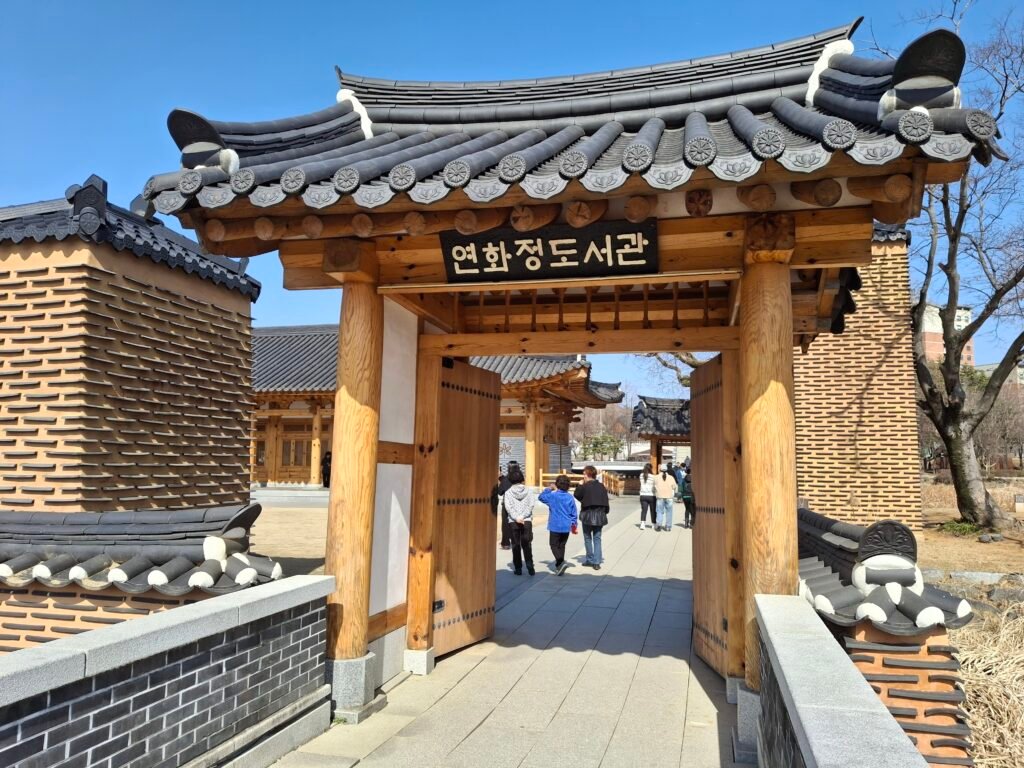
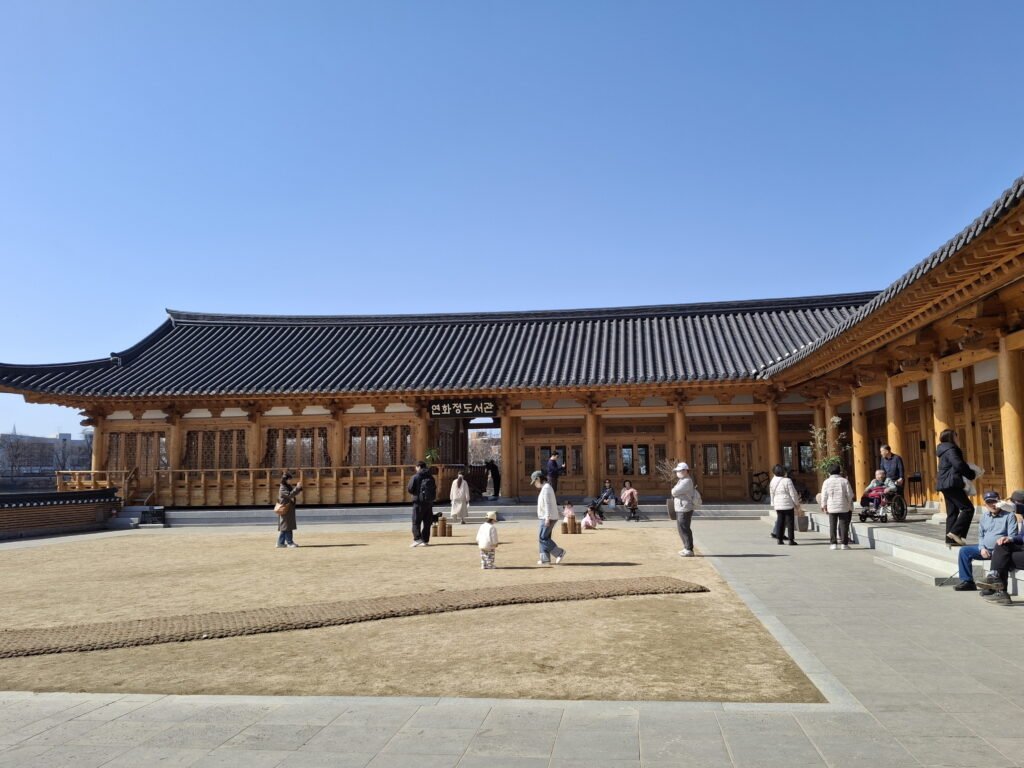
Video Caption: Success at Tuho after several attempts
The Sublime Beauty of Hanok Eaves
The Yeonhwajeong Library building is even more stunning when viewed up close. Since I was a child, whenever I looked at Hanok (traditional Korean houses), I’ve always been captivated by the roofline, particularly where the eaves meet.
There is an inexplicable, geometric, and intricate beauty in those structural lines. In particular, the subtle upward curve at the very tips of the eaves—gracefully lifting toward the sky—is what I consider to be the true essence and pinnacle of Korean architecture.
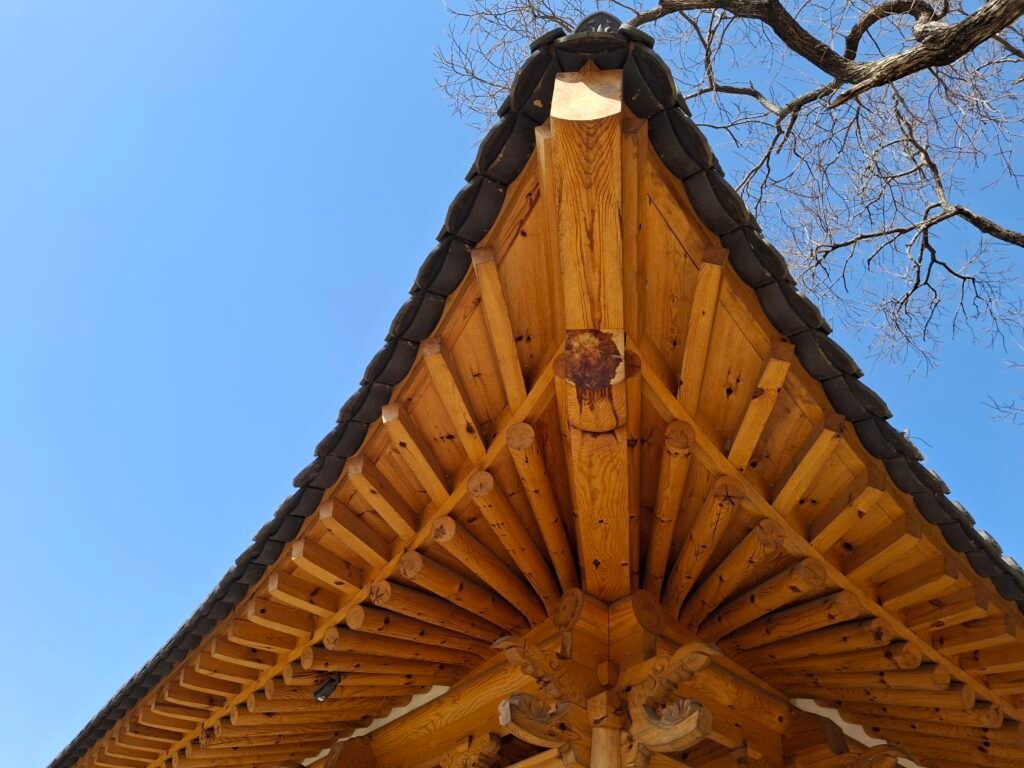
Photo Caption: Admiring the graceful lines of the eaves at Yeonhwajeong Library
Cozy Corners and Playful Talismans: Inside the Library
Stepping into the library, I was immediately greeted by a soft, cozy atmosphere. The warm lighting, combined with the wooden pillars and ceilings, wrapped the entire space in a gentle embrace. While many visitors were quietly lost in their books, the library also featured various charming props that made the visit even more engaging.
One particularly interesting find was the small talismans (Bujeok) resting on the desks. Traditionally, Korean talismans are yellow strips of paper with mysterious red symbols or characters used to ward off evil spirits or grant wishes. However, these modern versions were written in Hangul and carried a playful, lighthearted twist.
They featured phrases like:
- “A Great Person Appears” (귀인등장)
- “Lucky Vicky” (럭키비키 – a trendy Korean slang meaning “I’m feeling lucky”)
- “Wealth Acquisition” (재물취득)
- “Disaster Prevention” (재앙방지)
Above and below these main headings, tiny and adorable messages for wish fulfillment were written, adding a delightful sense of humor to the quiet library setting. It was a perfect blend of tradition and modern wit.
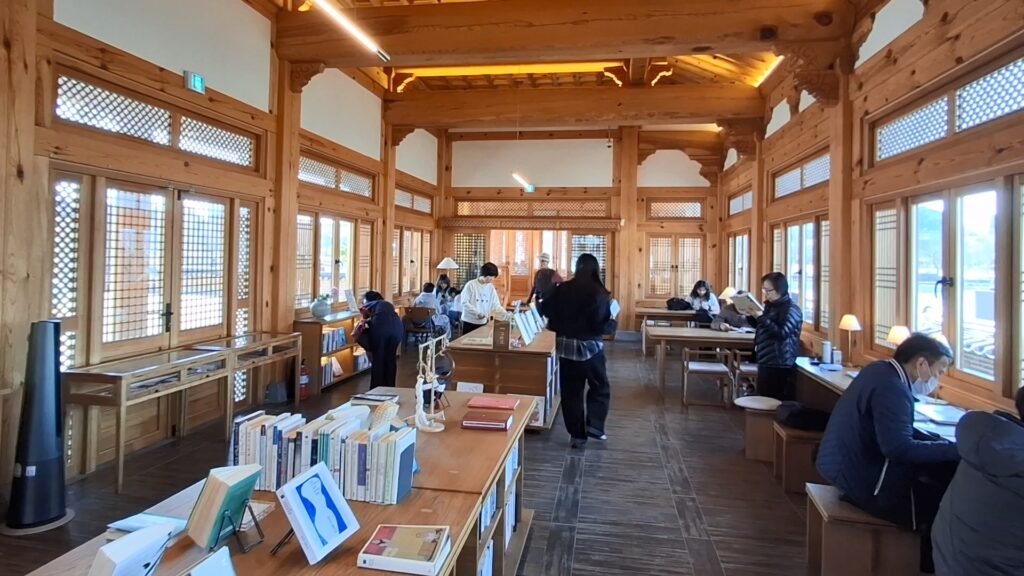
Photo Caption: Inside Yeonhwajeong Library at Deokjin Park in Jeonju
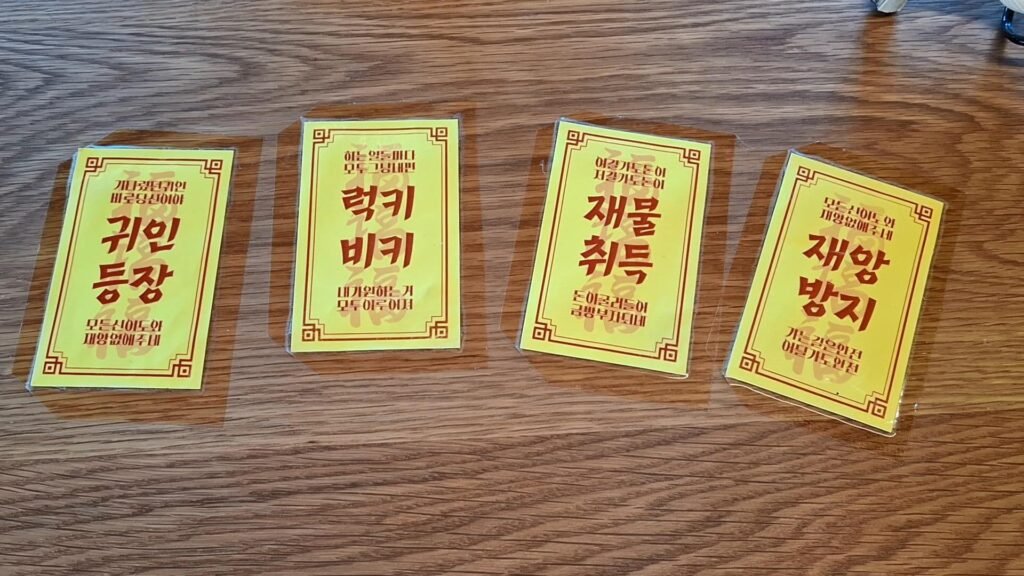
Photo Caption: Cute Talismans
The Hidden Charms Inside: Lotuses, Lanterns, and a Quirky Guardian
Beyond the books, the library held even more delightful surprises. I found artificial lotus blossoms—the iconic symbol of Deokjin Park—beautifully displayed, while Hanji-style curtains and the soft glow of lanterns within added an extra layer of cozy warmth to the space.
Lifting the curtains revealed a hidden gem: a view of Deokjin Lake that felt strikingly different from the one I had seen earlier. While the view from the outside was one of refreshing openness and freedom, the lake seen from within the library offered a subtle elegance and a quiet, meditative beauty that left a lingering impression on my heart.
I also spotted a unique tiger figurine gazing out at the water. It had the body of a tiger but the face of a Dokkaebi (Korean goblin)! Despite its supposedly fierce features, there was something humorous and oddly relatable about the doll. It felt less like a scary beast and more like a friendly companion, sharing a strange sense of kinship with those who stop to visit.
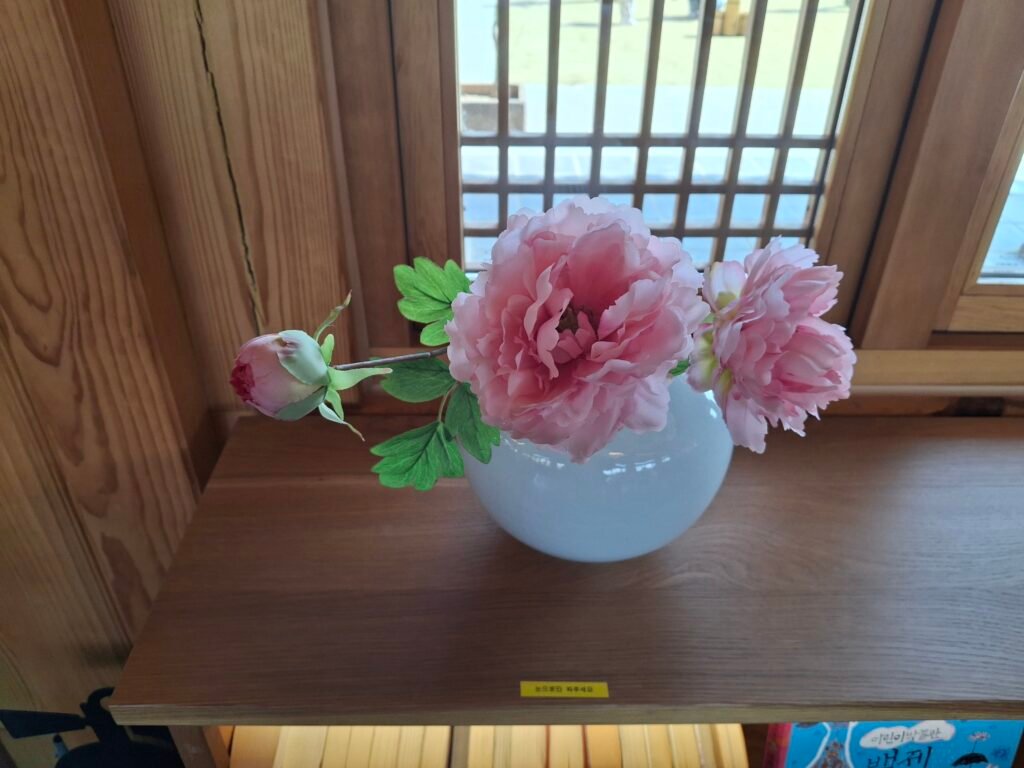
Photo Caption: Artificial lotus flowers
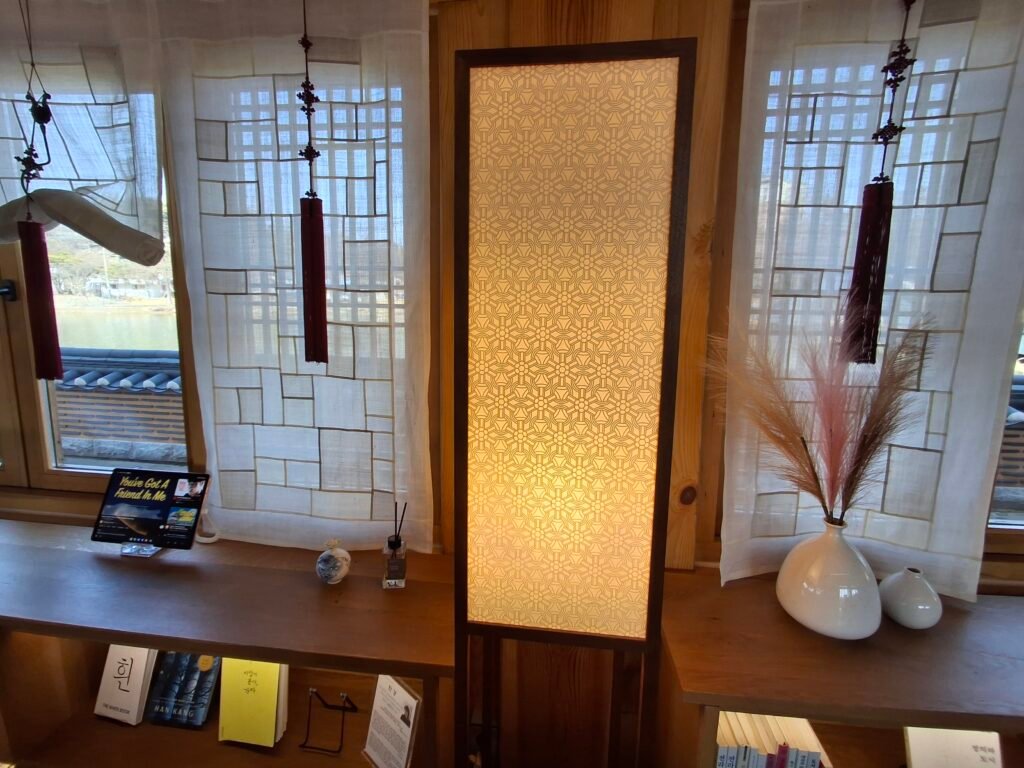
Photo Caption: Traditional Hanji Paper and Glowing Lanterns
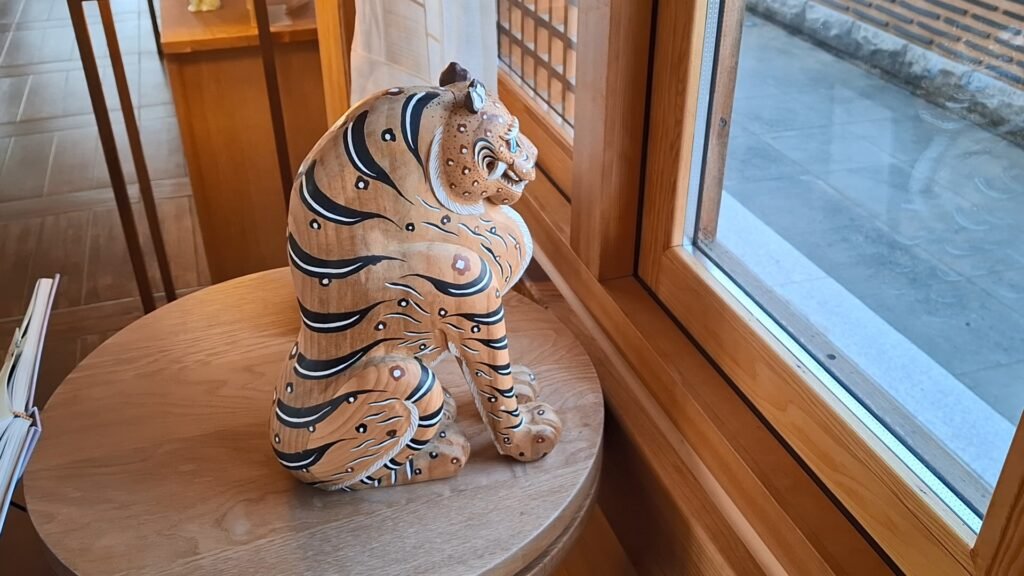
Photo Caption: A doll with the body of a tiger and the face of a Dokkaebi (Korean goblin)
Jeonju: The Home of Thousand-Year Hanji
Speaking of Hanji (traditional Korean paper), I must mention that Jeonju has been the heart of Korea’s high-quality paper production for centuries. There is an old saying in Korea: “Silk lasts five hundred years, but Hanji lasts a thousand.” This speaks volumes about the incredible durability and elegance of our traditional paper.
If you are captivated by the Hanji elements inside this library, I highly recommend visiting the Jeonju Hanji Museum located in Palbok-dong, Deokjin-gu. It is the first museum in Korea dedicated entirely to paper, where you can not only learn about its history but even try making your own Hanji by hand. It’s a must-visit spot to truly understand the “texture” of Jeonju’s heritage.
Another Hidden Gem Nearby: Jeonju Hanji Museum
Jeonju Hanji Museum
Address: 59 Palbok-ro, Deokjin-gu, Jeonju
Hours: 09:00–17:00 (Closed Monday)
Admission: Free
Quick Tips for Your Visit
- The Authentic Hanji Experience: This museum offers a deep dive into the history and traditional manufacturing process of Hanji (traditional Korean handmade paper).
- Unique Location: It is uniquely situated within the Jeonju Paper industrial complex. Don’t be surprised when you enter the factory gates—just follow the signs!
- Perfect for Families: With its educational exhibits and free admission, it’s a must-visit spot for families and travelers looking for a cultural experience in Jeonju.
A Moment of Serenity: The Cozy Rest Area & Reading Room
Right across from the library, you will find a charming rest area that also serves as a peaceful reading room. It is a unique space designed for true relaxation, allowing you to step away from the busy world for a moment.
To maintain the clean and tranquil atmosphere, this is a “shoes-off” zone. Once you take off your shoes and step inside, you can find a comfortable spot on the floor to sit and unwind. If you have spent some time exploring the museum’s exhibits, this is the perfect place to catch your breath and recharge.
The highlight of this space is the floor itself. As you sit down, you can feel the soft and natural texture of the wood, which brings a sense of calm and warmth to your body. It’s a wonderful spot to reflect on your journey or simply enjoy the quiet ambiance before heading to your next destination.
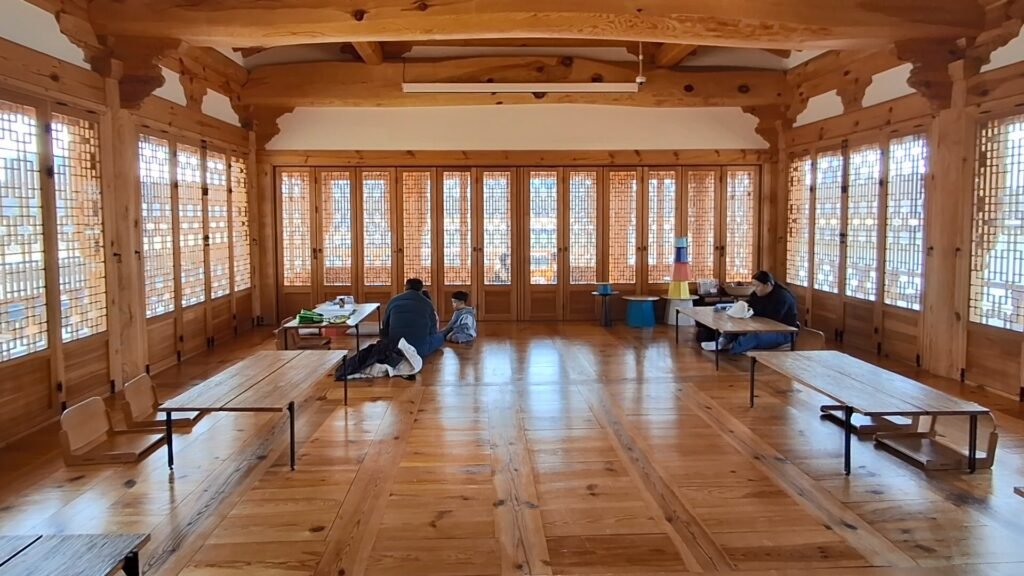
Photo Caption: Library Lounge
Crossing the Bridge to Childhood: A Playful Family Haven
After leaving the quiet library and crossing one more charming bridge, a vibrant playground unfolds before your eyes. It’s a wonderful sight that instantly brightens the mood. Filled with a variety of fun play equipment, this area is a true paradise for children and an incredibly practical stop for families traveling together.
What caught my eye the most was a unique chalkboard station. It’s a dedicated space where kids can pick up a piece of colorful chalk and let their imaginations run wild. The board was covered in playful, mischievous scribbles and doodles that were so adorable they couldn’t help but make me smile.
Seeing those drawings took me on a quick trip down memory lane. I remembered being a child myself—that irresistible urge to leave a little “mark” behind whenever I visited somewhere new, hoping to catch someone’s attention with a tiny piece of art or a name written in the corner.
Looking at the children lost in their world of chalk and play, I realized that the heart of childhood hasn’t changed at all. Whether it was decades ago or right now, that pure desire to express oneself and have fun remains exactly the same. It’s a heartwarming reminder that while the world changes, the joy of being a kid is truly timeless.
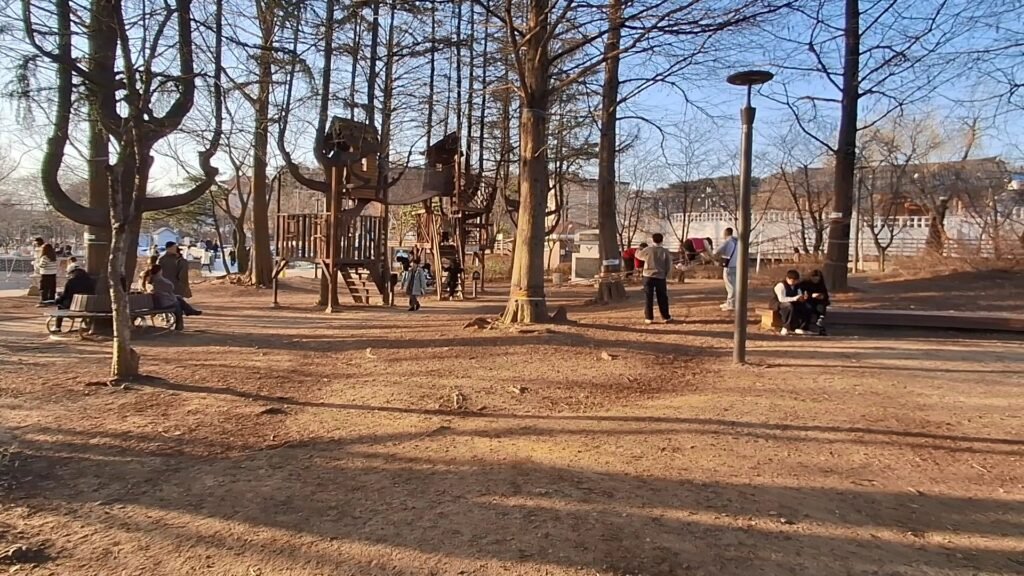
Photo Caption: A panoramic view of the playground

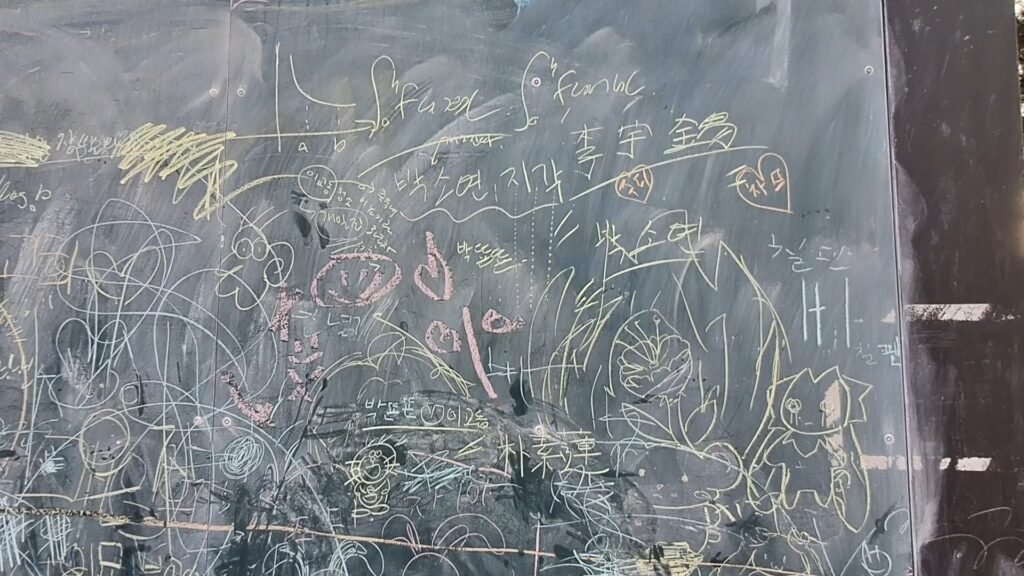
Photo Caption: Playful scribbles on the playground chalkboard
Essential Visitor Information & Facilities
To make your visit even more comfortable, here is a quick guide to the on-site facilities:
Parking
- The parking lot is conveniently located directly across from the playground.
Restrooms & Emergency Safety
- Location: Enter through Yeonjimun Gate, reach the pine tree roundabout, and turn right.
- Safety Features: All restrooms are equipped with emergency bells.
- Emergency Assistance: In case of an emergency, press the bell or clearly shout “Help!” (Saram-sallyeo / Sallyeo-juseyo). This will trigger an immediate police dispatch for your safety.
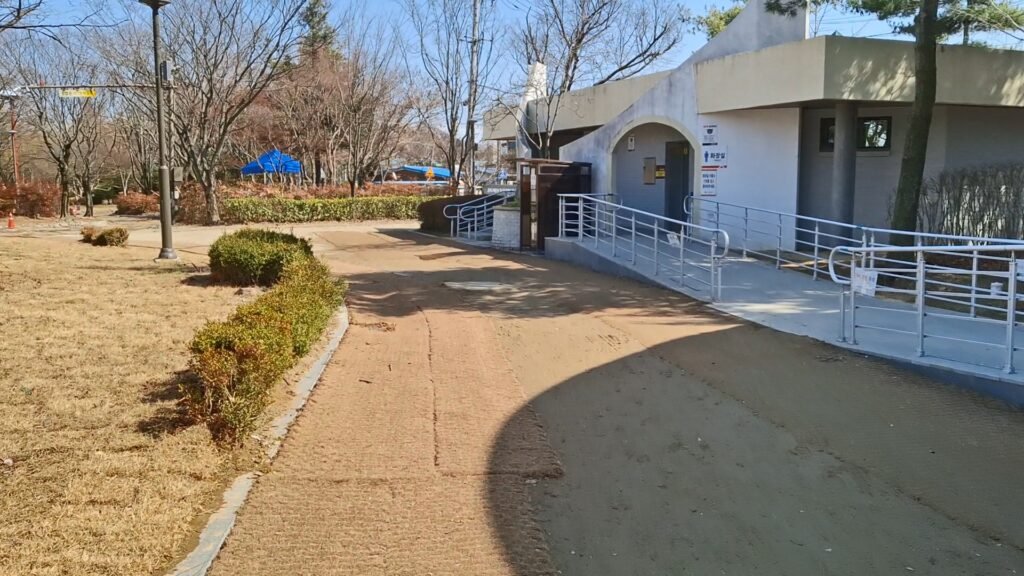
Photo Caption: Restroom
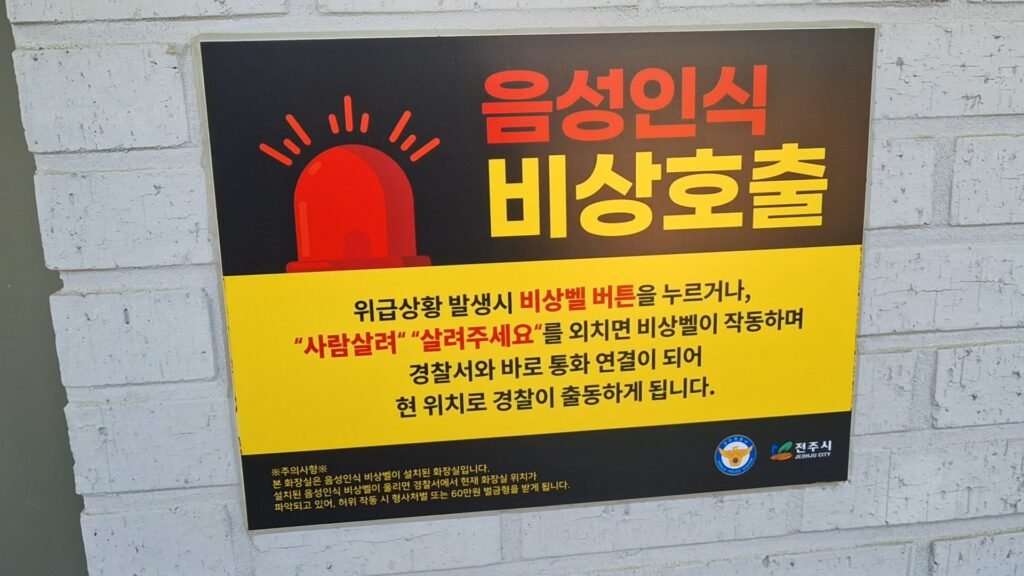
Photo Caption: Emergency Assistance
Local Police Station (Deokjin District Office)
- If you need urgent assistance, the Deokjin District Office is located north of Yeonjimun Gate.
- Deokjin District Police Office (Jeonju Deokjin Police Station)
- Contact: +82-63-277-0113
- Alternative (Local): 063-112 (No area code required)

Photo Caption: Deokjin District Police Office
Storage Lockers
- Location: Right next to the restrooms.
- How to Use: 1. Place your belongings inside the locker. 2. Press the asterisk (*) button. 3. Set any 4-digit PIN to lock.
- Operating Hours: 09:00 AM – 06:00 PM (Available every day, including weekends and holidays).
- Important: Lockers are strictly inaccessible outside of these operating hours.
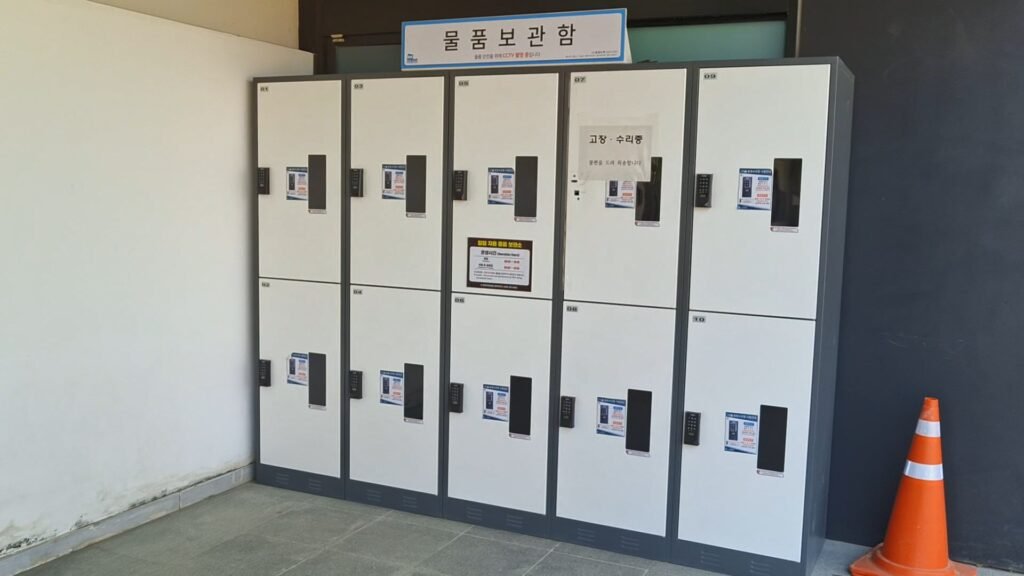
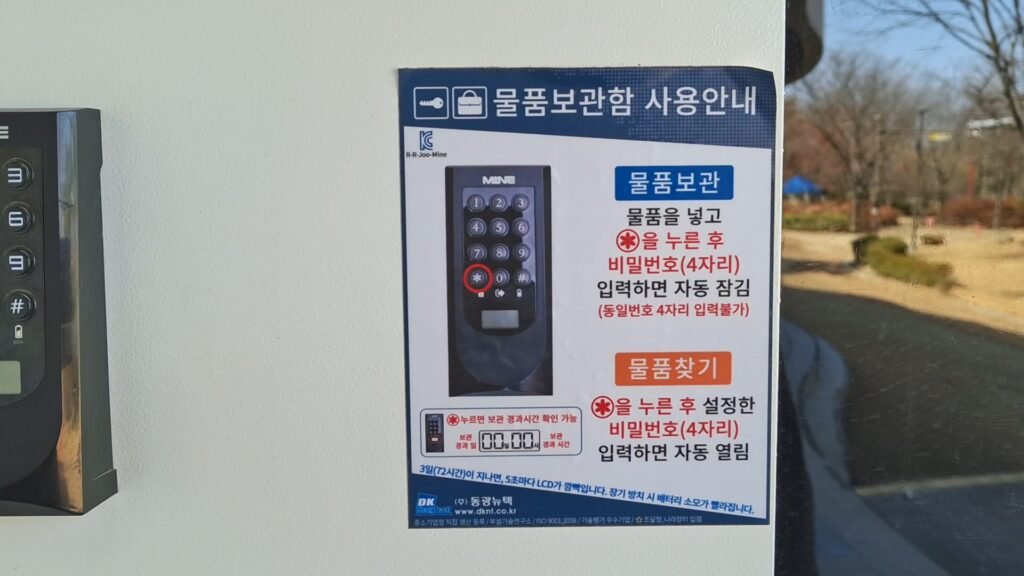
Photo Caption: How to Use the Storage Lockers
Local Insider Tips for Your Trip
1. The Magic of Night & The Musical Fountain While Deokjin Park is beautiful during the day, it truly comes alive at night. The soft, colorful illumination creates a romantic atmosphere that you shouldn’t miss. The highlight is the Musical Fountain, where water dances to music and lights.
- Operating Period: April to October (Closed on Mondays)
- Show Times (Standard):
- April–May & September–October: 13:30, 15:30, 17:30, 20:00 (Night show lasts 40 mins)
- June–August: 13:30, 15:30, 17:30, 20:30 (Night show lasts 40 mins)
- Note: Performances may be canceled during bad weather.
2. The Peak of Summer: Lotus Bloom Season Jeonju Deokjin Park is famous for its massive lotus pond. If you want to see the pond covered in a breathtaking sea of pink and white, plan your visit during the Lotus Bloom Season.
- Best Time to Visit: Mid-July to early August (Lotus flowers typically begin blooming in late June and reach their peak in late July).
3. Perfect One-Day Itinerary Make the most of your day! Deokjin Park is conveniently located near other major attractions. We highly recommend visiting Jeonbuk National University (JBNU) and the Jeonju Zoo, which are just a short distance away. You can enjoy a leisurely stroll through the university’s beautiful campus or have a fun family outing at the zoo before heading to the park for a relaxing evening.
Related Places in Jeonju
• Jeonju Hanok Village
• Jeonju Zoo
• Jeonbuk National University
• Jeonju Hanji Museum
If you plan to explore more of the city, don’t miss visiting 전주한옥마을, one of Korea’s most famous traditional villages.
Quick Travel Guide
Location: Jeonju, South Korea
Best Time to Visit: July–August (Lotus Bloom Season)
Famous For: Lotus Pond, Yeonhwajeong Library
Entrance Fee: Free
Time Needed: 1–2 hours
FAQ About Deokjin Park
Is Deokjin Park worth visiting?
Yes, it is one of the most beautiful parks in Jeonju.
When is the best time to visit Deokjin Park?
The best time is late July when the lotus flowers are in full bloom.
Is Deokjin Park free?
Yes, entry to the park is completely free.
Hunger after exploring? If you’re looking for a warm and comforting meal nearby, we highly recommend this local favorite:
👉 30-Year Favorite: Authentic Korean Soft Tofu Stew
#Jeonju #JeonjuTrip #JeonjuHanjiMuseum #DeokjinPark #LocalKoreaLife #KoreaTravelGuide #TravelWithKids #JeonjuLotus #MusicalFountain #KoreaTravelTips #JeonjuZoo #JBNU